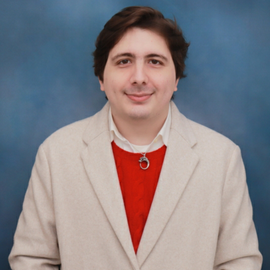
profile photo

Dr. Richard Capraru is currently affiliated with the International Research Center for Neurointelligence (IRCN), the University of Tokyo. His research lies at the intersection of robust autonomous systems, adversarial perception, predictive models, and agency in embodied and AI systems.

He earned his Ph.D. in Electrical and Electronic Engineering from Nanyang Technological University, Singapore in 2026, where he was awarded the Singapore International Graduate Award (SINGA). During his doctoral studies, he conducted research at the Institute for Infocomm Research (I²R), Agency for Science, Technology and Research (A*STAR), Singapore, and was a visiting doctoral researcher at Imperial College London through the NTU–TUM–Imperial Global Fellows Programme.

He earned his B.Eng. in Electrical and Electronic Engineering from University College London in 2021, where he was awarded the Laidlaw Scholarship. He is a Korea University alumnus (member of the Korea University Alumni Association (KUAA)), and was also a visiting student at the Hong Kong University of Science and Technology, Peking University, and the University of Tokyo. His interests include cybersecurity, machine learning, robotics, sensors, and automation. He is an IEEE member.

Email  /  Scholar  /  ResearchGate

Reflection

Another day slips quietly into history:
over London’s shining cobblestones, red buses blurred in mist and memory,
through Singapore’s warm night air, hawker smoke and harbour light,
past Seoul’s river wind and neon signs that soften into midnight,
along Beijing’s quiet hutongs, old courtyards breathing in the dark,
above Hong Kong’s slow green trams, stitched through the harbour’s spark,
beneath Tokyo’s soft-lit crossings and konbini glow that lingers under,
and along Bucharest’s familiar corners.
This day brushes all these cities,
and still finds its way to me.
I carry it gently.
I know, I am lucky.

Education

Education is a deeply personal journey that shapes not only what we know but also how we think, grow, and learn from others. I have been extremely fortunate and privileged to have studied at the following institutions.

Degrees
University logo placeholder Ph.D. in Electrical and Electronic Engineering
Nanyang Technological University (新加坡南洋理工大学)
2021 - 2026

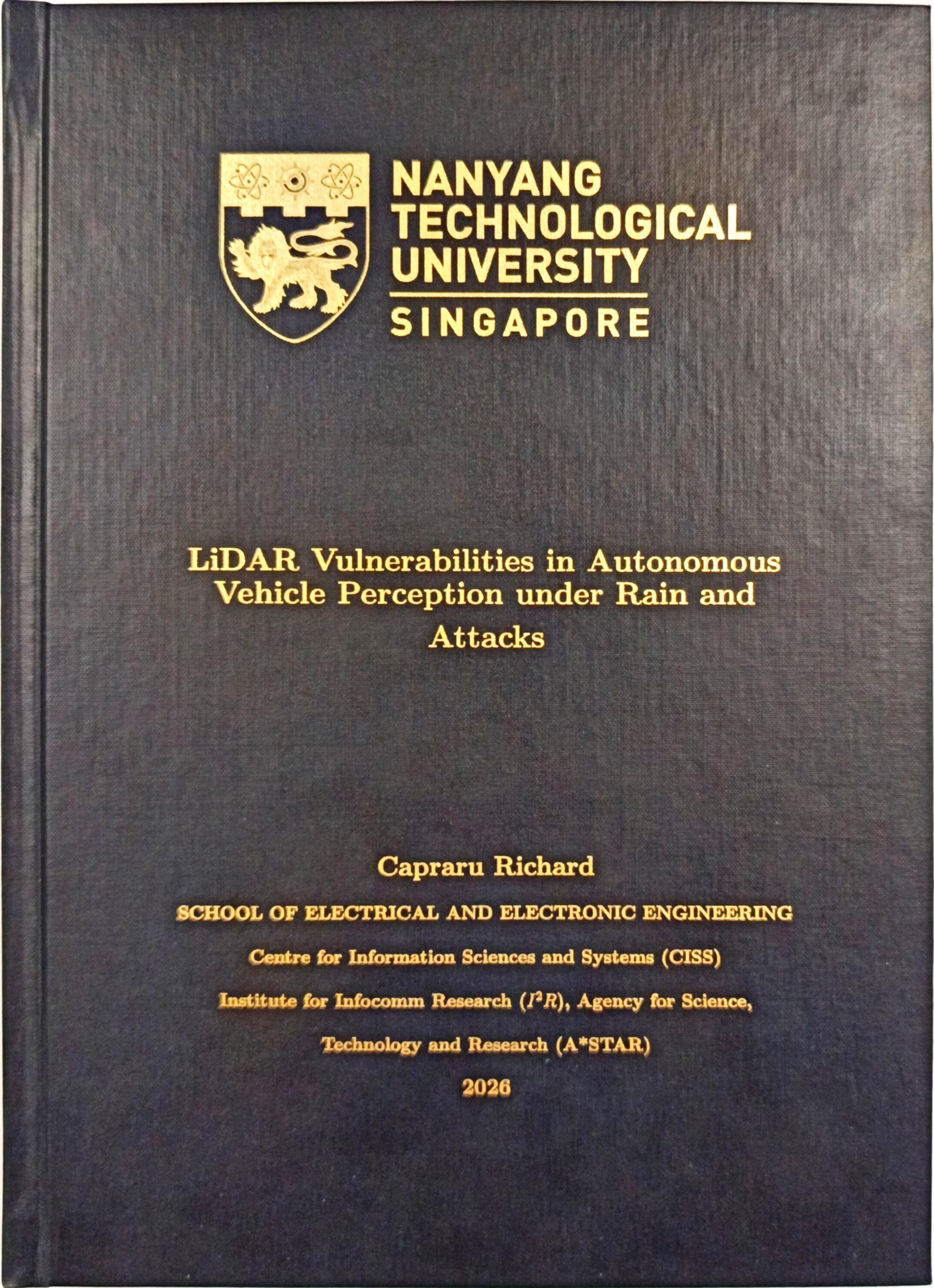
LiDAR Vulnerabilities in Autonomous Vehicle Perception under Rain and Attacks

University logo placeholder B.Eng. in Electrical and Electronic Engineering
University College London
2018 - 2021

Minor: Nanotechnology

Academic Visits and Exchanges

University logo placeholder Summer Term & Research Attachment
University of Tokyo (東京大学)
2024, 2026
University logo placeholder Summer Term
Peking University (北京大学)
2025
University logo placeholder Winter Term
Korea University (高麗大學校)
2023, 2024
University logo placeholder Research Attachment
Imperial College London
2023
University logo placeholder Autumn Term (online)
University of Southern California
2022
University logo placeholder Summer Term
Hong Kong University of Science and Technology
2019

Doctoral Research Affiliation

University logo placeholder A*STAR
Institute for Infocomm Research (I2R), Agency for Science, Technology and Research (A*STAR)
2021 - 2025

Awards

University logo placeholder Imperial-TUM-NTU Global Fellows
Global Fellows Programme (GFP)
2023
University logo placeholder Singapore International Graduate Award
Singapore Agency for Science and Technology (A*STAR)
2021
University logo placeholder Laidlaw Scholarship
Laidlaw Foundation
2019

Media

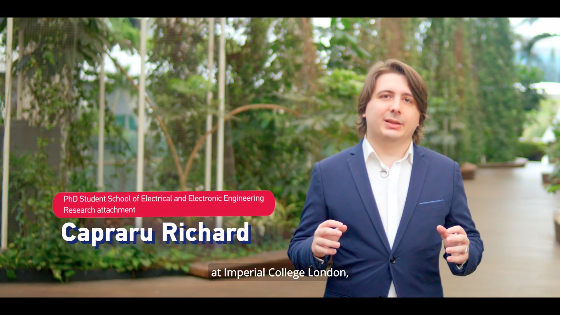
NTU Graduate College feature NTU Graduate College Corporate Video

I was honoured to be among the students featured by the NTU Graduate College.

Graduate College page

Research

My research sits at the intersection of robust autonomous systems, adversarial perception, predictive models, sensors, robotics, and embodied intelligence. Broadly, I am interested in how intelligent systems perceive uncertain environments, make structured sense of sensory information, and remain robust under real-world degradation or attack.

Project 1 image Cognitive Robotics

Predictive coding and related world-model-based approaches offer a powerful framework for understanding how embodied systems can infer, predict, and adapt. My current work explores these ideas through models of sense of agency, internal representations, and uncertainty in embodied and AI systems.

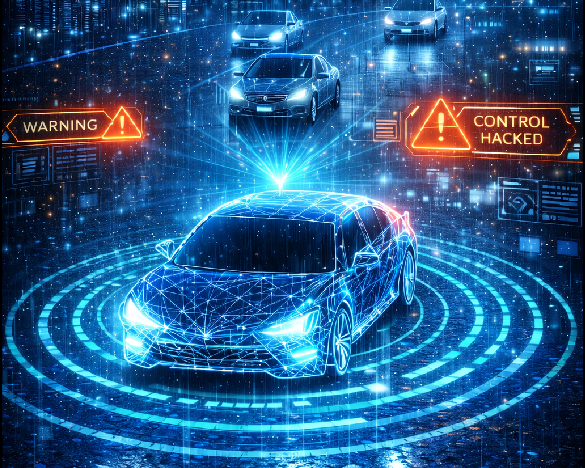
Project 1 image Autonomous Vehicle Cyber-Physical Security

Autonomous vehicles depend on tightly coupled sensing, learning, and control components. My work in this area examines how vulnerabilities in perception systems, especially LiDAR-based 3D object detection, can be exploited under adverse conditions such as rain, and how these weaknesses affect the safety and robustness of autonomous systems.

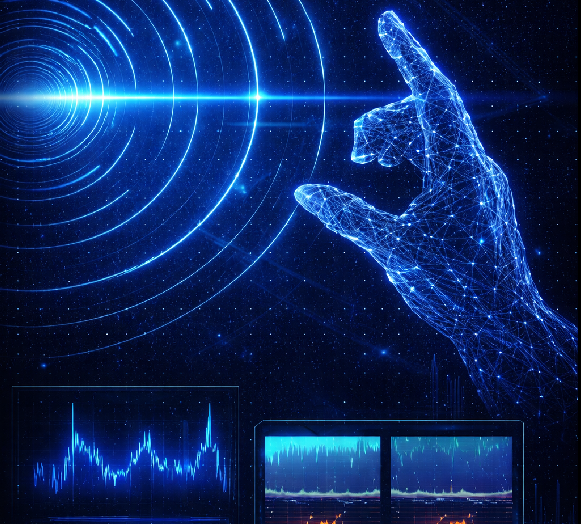
Project 2 image Gesture Recognition

My earlier work explored short-range radar sensing for hand gesture recognition, using micro-Doppler signatures to classify subtle motion patterns. This experience contributed to my broader interest in sensing, signal interpretation, and machine perception.

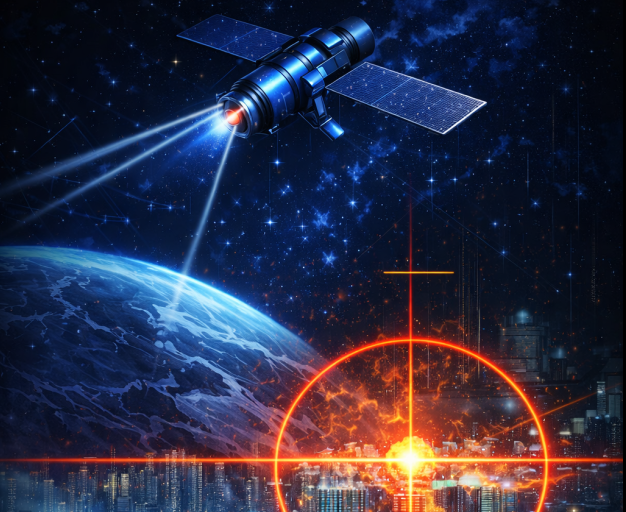
Project 2 image Synthetic Aperture Radar

I also worked on Synthetic Aperture Radar (SAR), including image analysis and degradation-related problems in remote sensing. This helped shape my interest in how sensing systems represent and interpret complex real-world signals under imperfect conditions.

Ph.D. Project

As my mentor, Professor Emil Lupu, once reminded me, the purpose of a Ph.D. is not merely to produce a thesis, but to become an independent researcher. I remain deeply grateful for the research training and intellectual guidance that made this work possible.

LiDAR Vulnerabilities in Autonomous Vehicle Perception under Rain and Attacks

This thesis studies how adverse weather and adversarial attacks interact to undermine LiDAR-based perception in autonomous vehicles, with a focus on minimal-point ghost-object insertion, object hiding, and defense failure under rain.

Demos / Presentations

Below you can find some demos/presentations of my works.

Rain-Reaper (IROS 2024)
Demo
Presentation

Publications

Below is a list of my published works, with selected papers highlighted.

clean-usnob Leveraging Adverse Weather for Enhanced LiDAR Spoofing in Autonomous Driving
Richard Capraru, Emil Lupu, Jian‑Gang Wang, Boon Hee Soong
IEEE Vehicular Technology Magazine, 2026

This study introduces a rain-aware threat model for LiDAR spoofing, showing how rain can make ghost-object insertion and object-hiding attacks more feasible, stealthy, and effective with a lower attack budget.

GhostLite: Data Minimization with Applications to Real‑Time LiDAR Attacks
Richard Capraru, Emil Lupu, Jian‑Gang Wang, Boon Hee Soong
 IEEE Vehicular Technology Conference (VTC‑Fall), 2025

This study proposes a geometric, heuristic-based LiDAR attack aimed at real-time ghost-object generation, reducing the data needed for attack construction while preserving physical realizability and improving execution speed.

 Overcoming Catastrophic Forgetting in Radar and LiDAR Object Detection in Rain via Layer Freezing and Data Augmentation
Richard Capraru, Jia‑Yu Wu, Jian‑Gang Wang, Matthew Ritchie, Emil Lupu, Boon Hee Soong
 IEEE Radar Conference (RadarConf), 2025

This study examines how adapting radar and LiDAR detectors to rain can cause catastrophic forgetting, and shows that layer freezing, mixed-weather pre-training, and simulated data augmentation help retain clear-weather performance while improving rain detection.

Rain‑Reaper: Unmasking LiDAR‑based Detector Vulnerabilities in Rain
Richard Capraru, Emil Lupu, Soteris Demetriou, Jian-Gang Wang, Boon Hee Soong
 IEEE/RSJ International Conference on Intelligent Robots and Systems (IROS), 2024

This paper introduces a genetic algorithm-based LiDAR spoofing attack for rainy conditions that exploits rain-induced degradation and critical detection points to generate effective ghost-object attacks with fewer adversarial points.

 Upsampling Data Challenge: Object‑Aware Approach for 3D Object Detection in Rain
Richard Capraru, Jian-Gang Wang, Boon Hee Soong
 Advanced Concepts for Intelligent Vision Systems: 21st International Conference (ACIVS), 2023

This paper studies object-aware point-cloud upsampling for LiDAR detection in rain, using a semi-supervised approach with a small number of labelled simulated objects to improve detection range and accuracy under adverse weather.

 Exploring deep transfer learning interference classification on neural style transfer generated synthetic SAR datasets
Richard Capraru, Jian-Gang Wang, Boon Hee Soong
 IEEE VTS Asia Pacific Wireless Communications Symposium (APWCS), 2022

This paper uses neural style transfer to generate realistic SAR images corrupted by radio-frequency interference and noise, then applies pre-trained CNNs to classify interference types.

 Exploring gesture recognition with low‑cost CW radar modules in comparison to FMCW architectures
Alan Bannon, Richard Capraru, Matthew Ritchie
 IEEE International Radar Conference (RADAR), 2020

This paper investigates whether very low-cost CW radar can support hand-gesture recognition, developing the required signal-processing setup and showing that CW radar can achieve high accuracy compared with FMCW at much lower cost.

 Dop‑NET: a micro‑Doppler radar data challenge
Matthew Ricthie, Richard Capraru, Francesco Fioranelli
 Electronics Letters, 2020

This paper introduces Dop-NET, a shareable micro-Doppler radar database and challenge for dynamic hand-gesture recognition, designed to support benchmarking and training of radar-based classification methods.

Professional Memberships

IEEE logo IEEE
RAS/AESS/SPS/ITSS
Laidlaw logo Laidlaw Network
NTU logo NTU Alumni Community
UCL logo UCL Alumni Community
KUAA logo Korea University Alumni Association (KUAA)
London Goats Club logo London Goats Club

Miscellanea

Reviewer

IEEE IROS
IEEE ICRA
IEEE RA-L
IEEE T-ASE
IEEE IV

Recorded Talks

IROS, 2024

Academic Service

Session Chair, VTC-Fall 2025

Co-Supervision and Teaching

Sensor fusion for object detection under adverse weather (BEng Dissertation)
3D Long‑Range Object Detection Under Rainy Conditions (BEng Dissertation)
Overcoming Forgetting for LIDAR Long Range Object Detection (MSc Dissertation)
Improving Long‑range 3D Object Detection with Data Augmentation and Attention Mechanism (MSc Dissertation)
LiDAR Sensing under Rainy Conditions (2 Design & Innovation Projects)
Introduction To Data Science And AI (Teaching)

Views


@ 2026 Richard Capraru